

Before Nigella, Delia and Mary became familiar Christmas guests in the sitting room, a cook who wanted help with pastry had to work from a page. This 1949 Ways with Pastry booklet is interesting for that reason. It does not merely describe a finished pie; it tries to make a sequence of movements visible.
When a recipe had to teach the hands
The cover is an immediate piece of domestic theatre. Under the plain authority of GOOD HOUSEKEEPING, the words “Ways with Pastry” are set against photographs of tarts, éclairs and decorated pieces. The original price—1/6—sits in the corner like a quiet reminder that this was a practical purchase, meant to be used rather than admired from a shelf.
What I find most revealing is the booklet’s insistence on order. The recipes move through actions—roll, cut, fill, seal, pierce, brush, bake—without assuming that the reader already knows what those verbs feel like. The page becomes a small piece of equipment: a fixed sequence for a pair of uncertain hands.
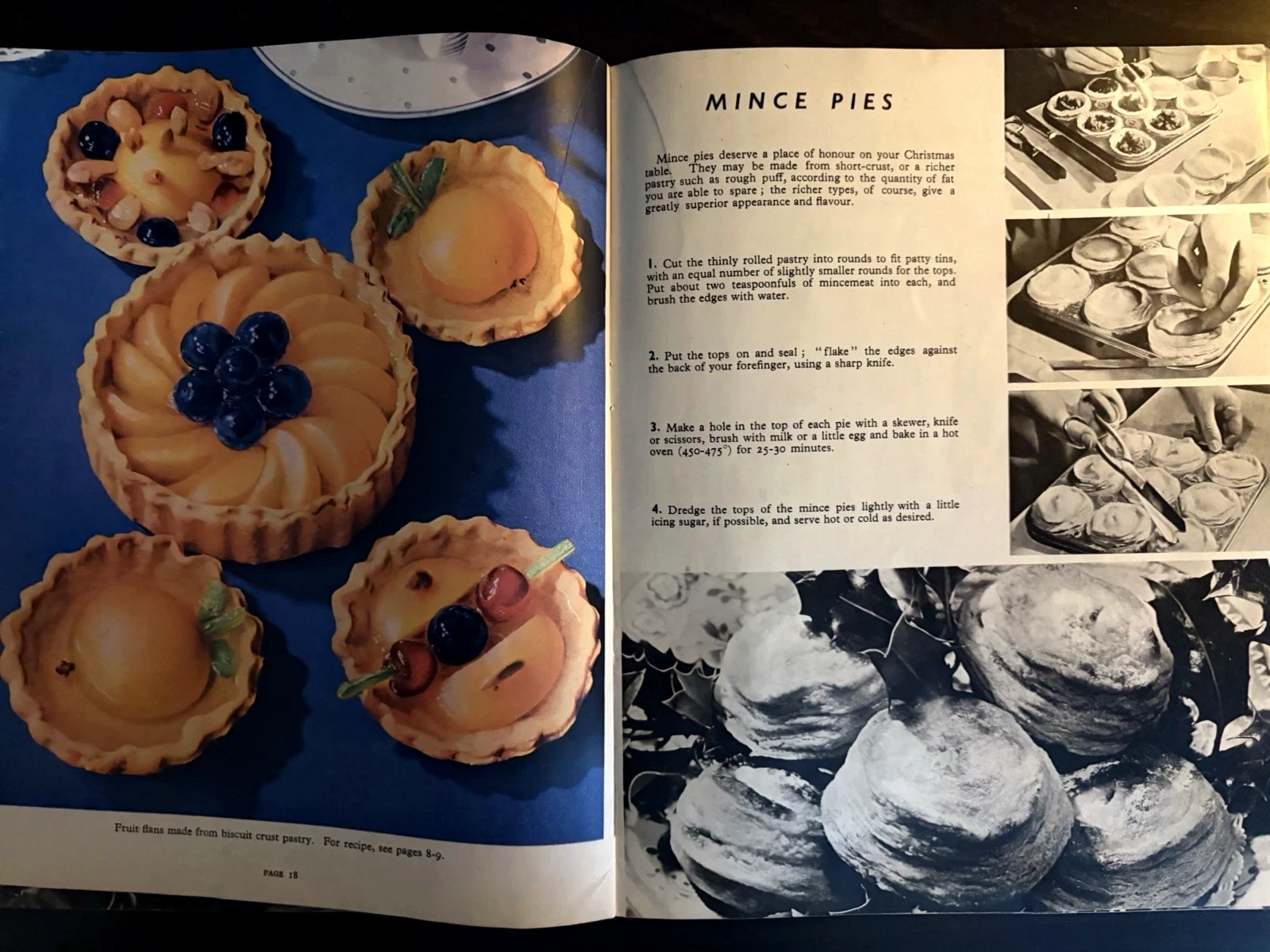
The small photographs along the margin are not decorative extras. They are evidence of hands at work. In a pre-video age, a sequence of still images had to carry movement: the gesture of pinching an edge, the placement of a lid, the small opening made for steam. This is the problem that television cooking later solved through the moving image.
From the page to the Christmas screen
Watching Delia Smith explain pastry, I recognise the same reassuring attention to cold ingredients, measured water and a light touch. In her quick flaky pastry recipe, she makes the control of the dough part of the lesson. Her demonstrations make the technique seem calm because the viewer can watch the moment when the dough is ready to stop being handled. The 1949 booklet has no voice and no close-up camera, so it uses order and repetition instead.
Nigella Lawson’s published Christmas mince-pie method makes the same sequence more theatrical: chill the flour and fats, stop mixing before the dough fully coheres, rest it, roll it thinly, then cut stars for the lids. The 1949 booklet is less conversational, but its photographs perform a similar job. They turn a difficult instruction into a set of visible decisions.
Mary Berry’s frangipane mince-pie recipe brings the process back to a reassuring domestic rhythm: roll, cut, fill, cover and bake. The difference is not really between old and new technique. It is between ways of staging the same knowledge: the booklet fixes it in a sequence of still images, while television lets us watch the sequence unfold.
The booklet’s “plain and fancy” promise contains that double purpose. It teaches a method, but it also teaches what the result should look like when it reaches other people—from the uncertain hand to the confident finished tray.
When I was a child, Christmas food seemed to appear fully formed: a tin opened, a dish carried in, a smell arriving from another room. Looking at this booklet makes me think about the less visible work behind that impression. Its charm is not nostalgia for a precise menu; it is the revelation of the small decisions that make a festive table look effortless.
That mixture of instruction and appetite is why the booklet feels closer to a domestic companion than a modern recipe database. It offers a finite route through a problem, then lets the finished pastry carry the social meaning. The same movement still structures a Christmas television segment: explain the difficult bit, show the hands, reveal the tray.
Instruction, appetite and the product beside it
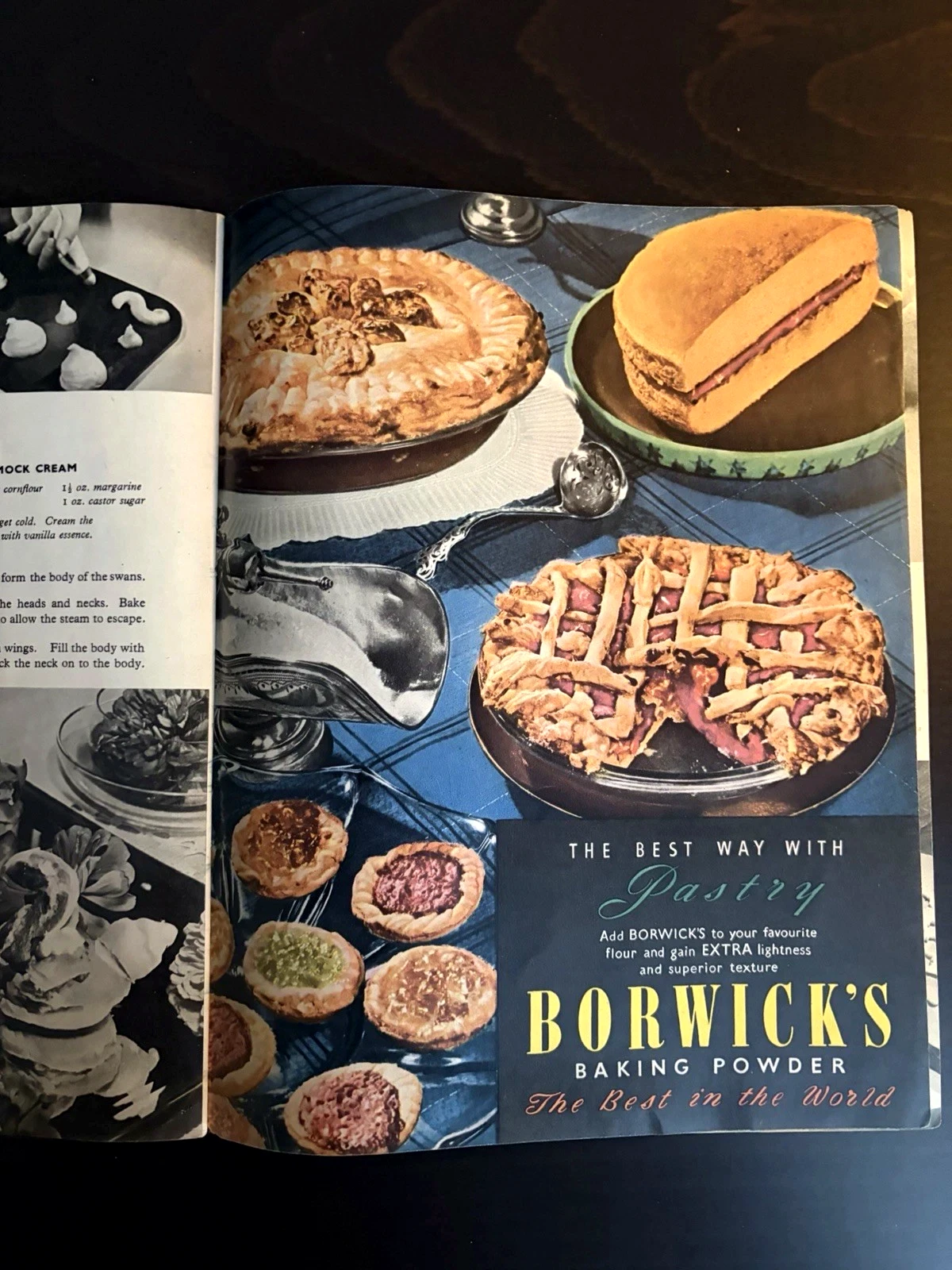
The facing baking spread adds a small complication. Alongside the pastry photographs sits a Borwick’s baking-powder advertisement, so the page is not only teaching technique; it is also placing a product inside the lesson. The promise is subtle but clear: the right method and the right ingredient belong together.
That is where the booklet differs from a purely domestic notebook. It carries institutional authority—the Good Housekeeping Institute’s tested voice—while allowing advertising to borrow some of that confidence. The reader is shown how to make pastry, and at the same time invited to believe that success can be made more dependable.
What remains in the booklet
The surviving copy carries the marks of use described in the listing: worn corners, creasing and age-toned pages. Those signs matter because the booklet’s subject is practice. Its authority was never meant to come from being pristine. It came from being opened at the right moment, consulted when the pastry was uncertain, and perhaps left within reach until the last tray had cooled.
The booklet remains compelling because it makes the ordinary act of following a recipe visible. Its photographs are not simply illustrations of food; they are a record of how printed instructions once carried movement, confidence and the promise of a successful Christmas table.